
Saw Palmetto: Benefits Beyond Prostate Health
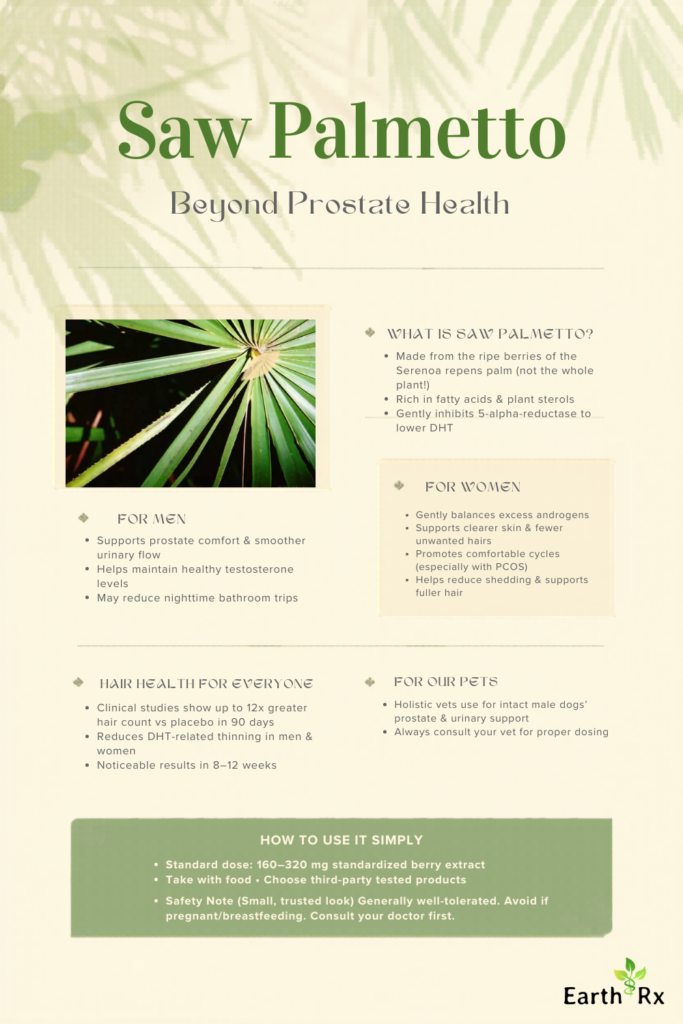
Saw palmetto berries are often turned to when addressing concerns like persistent hair shedding, hormonal imbalances, or frequent nighttime urination.
For generations, traditional herbalists and Indigenous healers in the southeastern United States have relied on these small, dark berries for reproductive and urinary support. In herbal traditions, saw palmetto is valued as a nourishing tonic that gently balances hormones and soothes the genitourinary system for both men and women. Modern research continues to explore these time-honored uses, highlighting its rich content of fatty acids and plant sterols.
Saw palmetto (Serenoa repens) gently inhibits the enzyme 5-alpha-reductase. This action helps slow the conversion of testosterone into DHT—the hormone frequently linked to hair thinning, prostate changes, and certain androgen-related imbalances. It also brings mild anti-inflammatory comfort to the urinary tract, making it a supportive herb in many natural wellness approaches.
Let’s explore how this berry can support your whole-family vitality—naturally and with care.
Gentle Support for Men’s Vitality
Herbalists have long recommended saw palmetto for urinary comfort and prostate support. Consistent use is traditionally associated with promoting smoother flow and fewer nighttime disruptions.
How Saw Palmetto Supports the Prostate
In herbal practice, saw palmetto is valued for its ability to gently influence prostate tissue. Its fatty acids and plant sterols help inhibit the enzyme 5-alpha-reductase, reducing the conversion of testosterone to the more potent dihydrotestosterone (DHT). Lower DHT levels can limit excessive prostate cell growth, which often contributes to benign prostatic hyperplasia (BPH).
Additionally, saw palmetto offers mild anti-inflammatory effects that may calm prostate tissue and support relaxed smooth muscle in the urinary tract. This combination can lead to improved urine flow, reduced urgency, and greater daytime and nighttime comfort for many men. While research results vary, herbalists often pair it with lifestyle changes for best outcomes.
Beyond the prostate, saw palmetto may help maintain healthy testosterone levels by moderating DHT. This can support sustained energy, mood stability, and reduced hair shedding with improved retention in cases of androgen-related thinning.
Empowering Benefits for Women
In herbal practice, saw palmetto is valued for its ability to gently moderate excess androgens.
How Saw Palmetto Moderates Excess Androgens
Saw palmetto works primarily by inhibiting the 5-alpha-reductase enzyme, which converts testosterone into the stronger androgen DHT. By slowing this conversion, it helps lower circulating DHT levels that can contribute to symptoms like acne, unwanted facial or body hair (hirsutism), and scalp thinning.
It may also reduce androgen uptake into tissues and mildly influence androgen receptor activity. For women navigating PCOS or perimenopause, this gentle balancing action often supports clearer skin, more comfortable menstrual cycles, and reduced androgen-driven discomfort—without the harsh effects of some conventional treatments. Herbalists frequently recommend it alongside nourishing foods and stress management for holistic support.
Hair Health for Everyone
Saw palmetto may support hair growth by inhibiting the 5-alpha reductase enzyme, thereby reducing levels of dihydrotestosterone (DHT)—a hormone responsible for hair follicle miniaturization in androgenetic alopecia. This mechanism helps prevent further hair thinning and may promote regrowth. Clinical studies have shown that standardized saw palmetto extracts, particularly those rich in bioactive fatty acids, can significantly increase terminal and vellus hair counts, improve hair density, thickness, and reduce shedding over 90 to 180 days, with benefits continuing to grow over time. While its effects are generally milder than pharmaceuticals like finasteride, saw palmetto offers a well-tolerated, natural alternative with minimal side effects, making it a promising option for both men and women experiencing hair thinning.
Another recent clinical study in a 2025–2026 trial, participants taking a proprietary saw palmetto extract (160 mg daily) experienced total hair count increases up to 12 times greater than placebo after 90 days, along with improvements in hair density and reduced shedding.
Pro Tip: Pair saw palmetto with an anti-inflammatory diet rich in berries, leafy greens, and omega-3s. This simple synergy amplifies its natural hormone-supporting effects.
A Helping Paw: Saw Palmetto for Pets
Holistic veterinarians and herbal pet care traditions sometimes recommend saw palmetto for intact male dogs dealing with benign prostate enlargement or urinary discomfort. It may ease inflammation and support healthier urine flow, though clinical evidence in dogs remains limited and mixed.
Always consult your veterinarian for proper dosing by weight and species. Pet-specific formulations are preferred, and cats require extra caution due to even less research.
Simple Ways to Add Saw Palmetto to Your Daily Routine
- Standard dose for adults: 160–320 mg daily of a standardized liposterolic extract (often split into two doses with food for best absorption).
- Forms that work well: Softgel capsules, liquid tinctures, or topical serums for direct scalp application.
- For pets: Use only veterinarian-approved formulations—never human products without guidance.
Start low, track how you feel over 8–12 weeks, and celebrate the small wins along the way.
Safety First: What You Need to Know
Saw palmetto is generally well-tolerated when used as directed, with mild side effects like occasional stomach upset, headache, or nausea reported in a small number of users. It has been studied safely for up to three years in many cases.
Important cautions: Avoid during pregnancy or breastfeeding. Check with your doctor before use if you take blood thinners, hormone medications, or have hormone-sensitive conditions. Always choose third-party tested supplements for purity and potency.
FAQ: Your Most Common Questions About Saw Palmetto
What is saw palmetto used for?
It is traditionally used for urinary and reproductive support. Modern interest focuses on prostate comfort in men, hormonal balance and hair health in women and men, and mild urinary support overall.
Does saw palmetto really help with hair loss?
Yes—emerging studies show it can reduce shedding and support regrowth in both men and women by lowering DHT effects on hair follicles. Results often appear after 3–6 months of consistent use.
Is saw palmetto safe and effective for women?
Many women use it successfully for androgen-related concerns like thinning hair, acne, or cycle irregularities. It is generally considered safe for non-pregnant adults, but always consult your healthcare provider first.
Can I give saw palmetto to my dog or cat?
It may offer prostate and urinary support for dogs (especially intact males), but evidence is limited. Never use without veterinary approval—dosing must be tailored to your pet’s size, age, and health status.
What is the best dosage and form?
Most studies use 160–320 mg of standardized extract daily (85–95% fatty acids). Capsules are convenient; topical options suit scalp-focused goals. Take with food to minimize any digestive sensitivity.
Are there any side effects?
Side effects are usually mild and uncommon. Rare reports include stomach discomfort or headache. It does not typically affect libido or hormone levels dramatically when used appropriately.
How long does it take to see results?
Hair and urinary benefits often build gradually—many notice changes within 8–12 weeks, with fuller effects at 3–6 months. Consistency is key.
Quick Breakdown:
Saw palmetto supplements and extracts come almost exclusively from the ripe berries (the fruit) of the Serenoa repens palm — not from the leaves, stems, roots, or the whole plant.
- Traditional and modern use: Indigenous healers and herbalists have long used the dark, ripe berries (fresh, dried, or as tea). Today, the standardized extracts you see in capsules (the liposterolic or hexane extracts rich in fatty acids and phytosterols) are made specifically from these berries.
- Why only the berries? That’s where the highest concentration of the active compounds—especially the fatty acids and plant sterols that support hormone balance—naturally occurs. The rest of the plant doesn’t provide the same beneficial profile.
- Whole berries vs. extract: You can find whole dried berries or berry powder for teas and tinctures, but most clinical research and high-potency supplements use a concentrated extract of the berry’s oily/fatty portion for better consistency and absorption.
In short: when you pick up a quality saw palmetto product, you’re getting the goodness concentrated from the berries only. The rest of the palm stays in the wild (or in the landscape), where it belongs.
This is why herbalists emphasize choosing high-quality, standardized berry extracts for the best results in supporting prostate comfort, hair health, or hormonal balance.
If you’re choosing a supplement, look for labels that say “saw palmetto berry extract” or “Serenoa repens fruit extract” with a guaranteed percentage of fatty acids (usually 85–95%). That ensures you’re getting the real, researched part of the plant.
Your Next Step Toward Natural Balance
God designed plants like saw palmetto as gentle allies for our bodies—reminders of provision for daily wellness. Talk with your healthcare provider (or holistic vet) to see if it fits your journey. Choose a high-quality, standardized product, and begin tracking simple improvements in energy, comfort, and confidence.
You deserve to feel vibrant, balanced, and empowered every day. Give this natural option a thoughtful trial, and watch how small, consistent steps create meaningful change.
Here’s to thriving from the inside out—your wellness journey just gained a powerful, time-tested friend.
Sources & References
This post is for educational purposes only and is AI-assisted, reviewed for accuracy based on available scientific literature. It is not medical or veterinary advice. Always consult qualified professionals before starting any new supplement, especially for hormone-related concerns or pet health.
- Healthline: Saw Palmetto Benefits Overview. https://www.healthline.com/nutrition/saw-palmetto-benefits
- Verywell Health: Saw Palmetto Benefits, Side Effects, and Uses.https://www.verywellhealth.com/the-benefits-of-saw-palmetto-88334
- WebMD: Saw Palmetto Uses and Information. https://www.webmd.com/vitamins/ai/ingredientmono-971/saw-palmetto
- Dr. Will Cole on Saw Palmetto for PCOS. https://drwillcole.com/saw-palmetto-for-pcos/
- Herbal Reality: Traditional and Modern Uses of Saw Palmetto. https://www.herbalreality.com/herb/saw-palmetto/
- Veterinary insights on Serenoa repens in dogs: https://pubmed.ncbi.nlm.nih.gov/10951976/
- Additional resources on saw palmetto for women: https://www.singlecare.com/blog/saw-palmetto-for-women/
- Restorative Medicine Digest on Saw Palmetto and PCOS. https://restorativemedicine.org/digest/saw-palmetto-may-reduce-elevated-androgens-and-prolactin-in-women-with-pcos/
For the most current research, search PubMed or consult a trusted healthcare provider.