
Willow Bark: Nature’s Original Pain Reliever
For thousands of years, long before modern medicine filled our cabinets with synthetic pills, people turned to nature for relief. One of the most powerful and time-tested remedies? Willow bark.
Long before aspirin hit pharmacy shelves, ancient healers across cultures reached for the willow tree when someone was in pain. Whether it was a throbbing headache, stiff joints, or a feverish illness, willow bark was often the go-to remedy. And today, science is catching up to what traditional medicine has known for centuries: willow contains natural compounds that support pain relief, reduce inflammation, and promote overall wellness—all without the harsh side effects of many over-the-counter drugs.
Let’s dive into the remarkable health benefits of willow, how it works, and why this ancient botanical deserves a place in your modern wellness routine.
How Willow Became the “Original Aspirin”
The story of willow begins long before laboratories and chemical formulas. In fact, the use of willow bark for medicinal purposes dates back over 2,500 years.
Ancient Egyptians, Greeks, and Native American healers all documented the use of willow to treat pain and fever. The Ebers Papyrus, an Egyptian medical text from 1500 BCE, mentions using willow leaves to reduce inflammation. Hippocrates, the father of modern medicine, recommended chewing on willow bark to ease pain and lower fevers.
But it wasn’t until the 19th century that scientists isolated the active compound responsible: salicin.
When ingested, salicin is converted in the body into salicylic acid—the very same compound that inspired the creation of acetylsalicylic acid, better known as aspirin.
Yes, that’s right: aspirin was originally derived from willow bark.
In 1897, a chemist at Bayer synthesized acetylsalicylic acid to create a more stable, less stomach-irritating version of salicylic acid. The result? One of the most widely used medications in history—born from a tree.
But here’s the twist: while aspirin delivers fast-acting relief, it often comes with risks—like stomach ulcers, bleeding, and kidney strain. Willow bark, on the other hand, offers a gentler, more holistic approach to pain and inflammation, thanks to its full spectrum of natural compounds.
What’s Inside Willow That Makes It So Powerful?
Willow bark doesn’t just contain salicin—it’s packed with a range of beneficial phytochemicals that work together to support the body’s natural healing processes.
Here’s a breakdown of the key compounds:
- Salicin: The primary pain-relieving and anti-inflammatory agent. Unlike aspirin, salicin is metabolized more slowly, leading to a gradual, sustained release of relief—often with fewer side effects.
- Polyphenols and flavonoids: These antioxidants help combat oxidative stress, protect cells, and support immune function.
- Tannins: Natural astringents that can soothe irritated tissues and support digestive health.
- Catechins: Found in green tea and willow alike, these compounds support cardiovascular health and reduce inflammation.
This synergistic blend is one reason why whole-plant willow extract may be more effective and better tolerated than isolated salicylic acid.
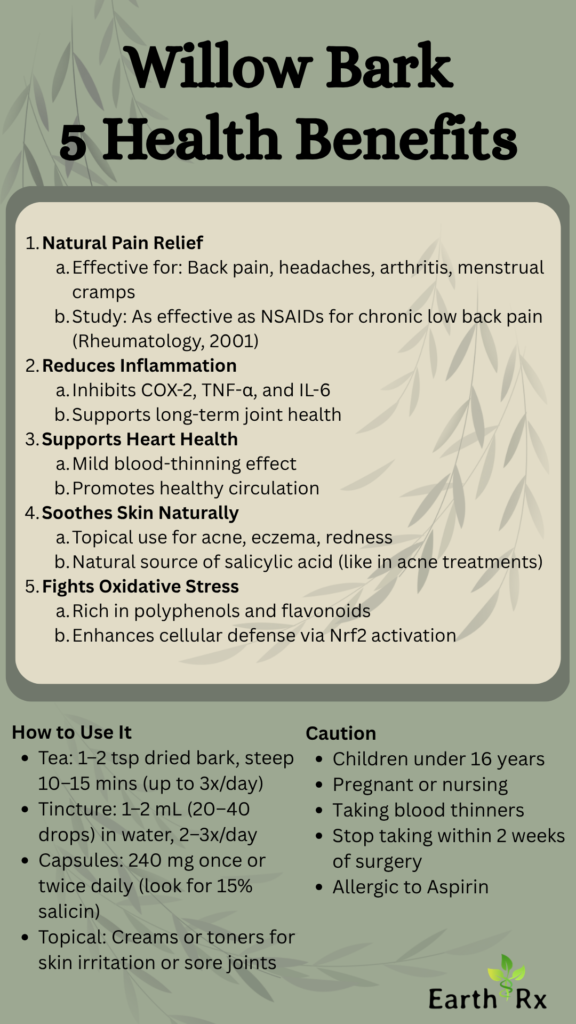
Modern research supports this: a 2001 study published in Rheumatology found that willow bark extract was as effective as conventional painkillers in reducing lower back pain—without the gastrointestinal side effects.
7 Science-Backed Health Benefits of Willow Bark
1. Natural Pain Relief Without the Crash
One of the most well-documented uses of willow bark is for managing pain—especially chronic conditions like:
- Low back pain
- Osteoarthritis
- Headaches and migraines
- Menstrual cramps
A meta-analysis of clinical trials found that patients taking willow bark experienced significant reductions in pain intensity, with effects becoming more pronounced after several weeks of consistent use.
While pure aspirin is not a sedative per say, drowsiness and fatigue are listed as possible side effects in medical resources.
~Individual Variation: Some people may experience mild drowsiness, dizziness, or fatigue after taking aspirin, while others do not.
~Indirect Effects: Aspirin can disrupt sleep architecture by affecting melatonin and prostaglandin levels, potentially leading to poorer sleep quality and daytime tiredness. Gastrointestinal side effects like heartburn can also interrupt sleep.
Unlike NSAIDs (nonsteroidal anti-inflammatory drugs), which can damage the gut lining over time, willow bark appears to be gentler on the digestive system—especially when taken with food.
2. Reduces Inflammation at the Source
Chronic inflammation is linked to nearly every major disease—from heart disease to diabetes to Alzheimer’s. Willow bark’s natural salicin and flavonoids help modulate the body’s inflammatory response by inhibiting COX-2 enzymes (the same pathway targeted by many prescription drugs).
But here’s the difference: willow doesn’t completely shut down inflammation (which the body needs for healing). Instead, it balances the response, preventing it from going into overdrive.
This makes it ideal for long-term use in managing inflammatory conditions—without suppressing the immune system.
3. Supports Joint Health and Mobility
For those struggling with arthritis, willow bark can be a game-changer.
Studies show that regular use of willow extract leads to improved joint flexibility, reduced stiffness, and less morning pain. When combined with other joint-supportive herbs like turmeric, boswellia, and ginger, the effects are even more powerful.
Many users report being able to reduce their reliance on prescription painkillers after incorporating willow into their daily routine.
4. Soothes Fever Naturally
Fever is the body’s way of fighting infection. But when it gets too high, it can be uncomfortable and even dangerous—especially in children.
Willow bark has long been used as a natural antipyretic (fever reducer). Its ability to gently lower body temperature makes it a valuable tool during cold and flu season.
However, willow should not be given to children or teens with viral infections due to the risk of Reye’s syndrome—a rare but serious condition linked to salicylates. Always consult a healthcare provider before using willow in pediatric cases.
5. Promotes Heart Health
Salicylates are known to have blood-thinning properties, which can help prevent clots and support healthy circulation.
While willow bark is not a substitute for prescribed anticoagulants, its mild blood-flow-enhancing effects may contribute to cardiovascular protection—especially when combined with a heart-healthy diet and lifestyle.
Some research suggests that regular, low-dose salicin intake may help reduce the risk of stroke and heart attack in at-risk individuals.
6. May Support Skin Healing and Anti-aging
Topical applications of willow bark extract are increasingly popular in natural skincare.
Thanks to its anti-inflammatory and antimicrobial properties, willow is used in products designed to treat:
- Acne
- Eczema
- Psoriasis
- Minor wounds and insect bites
- Reduce the visible signs of skin aging when applied topically
Its natural salicylic acid content makes it a gentler alternative to synthetic versions found in many acne treatments—without over-drying or irritating the skin.
Look for toners, masks, and serums that list Salix alba (white willow) extract as a key ingredient.
7. Enhances Overall Wellness Through Gentle Detoxification
In traditional Chinese and Ayurvedic medicine, willow was often used to “clear heat” from the body—a concept that aligns with modern ideas of detoxification and metabolic balance.
By supporting the liver’s natural detox pathways and reducing systemic inflammation, willow helps the body regain equilibrium during times of stress, illness, or environmental toxin exposure.
It’s not a dramatic cleanse—it’s a steady, supportive nudge toward better function.
How to Use Willow Bark Safely and Effectively
You can enjoy the benefits of willow in several forms:
1. Tea
- Steep 1–2 teaspoons of dried willow bark in hot water for 10–15 minutes.
- Drink up to 3 times daily for pain or fever.
- Add honey and lemon for taste and added soothing effects.
Tip: Combine with ginger or cinnamon for enhanced circulation and flavor.
2. Tinctures and Extracts
- Liquid extracts offer faster absorption.
- Typical dose: 1–2 mL (20–40 drops) in water, 2–3 times daily.
- Look for standardized extracts with 15% salicin content for consistent potency.
3. Capsules and Tablets
- Convenient for daily use.
- Follow label instructions, usually 240 mg once or twice daily.
- Best taken with food to minimize stomach upset.
4. Topical Creams and Lotions
- Apply directly to sore joints, muscles, or irritated skin.
- Often combined with menthol, arnica, or essential oils for added relief.
Who Should Avoid Willow Bark?
While willow is generally safe for most adults, there are important precautions:
- Do not use if you are allergic to aspirin or other salicylates.
- Avoid during pregnancy and breastfeeding unless approved by a healthcare provider.
- Not recommended for children under 18 with viral infections.
- Use caution if taking blood thinners (like warfarin), NSAIDs, or diabetes medications—willow may interact with these drugs.
- Stop using at least 2 weeks before surgery due to bleeding risk.
Always consult your doctor before starting any new herbal regimen—especially if you have a chronic condition or are on medication.
Choosing a High-Quality Willow Supplement
Not all willow products are created equal. Here’s how to pick a trustworthy one:
- Look for standardized extracts (e.g., 15% salicin) for consistent dosing.
- Choose organic or sustainably harvested bark to avoid pesticides and support eco-friendly practices.
- Check for third-party testing for purity and potency.
- Avoid products with unnecessary fillers, artificial colors, or preservatives.
- Buy from reputable brands with transparent sourcing and manufacturing practices.
Some top-rated brands include Gaia Herbs, Nature’s Way, and Herb Pharm.
Willow in the Kitchen: Culinary and Lifestyle Uses
While you won’t find willow bark in your spice rack, it can still play a role in daily wellness.
Try this simple anti-inflammatory tea blend:
“Nature’s Pain Relief” Tea
- 1 tsp dried willow bark
- 1 tsp dried ginger root
- ½ tsp cinnamon
- 1 clove
- 1 cup boiling water
Steep for 15 minutes, strain, and enjoy. Add raw honey if desired.
Drink this during cold season, after intense workouts, or when joint pain flares up.
You can also incorporate willow into herbal compresses for sore muscles:
- Brew a strong batch of willow tea.
- Soak a clean cloth in the liquid.
- Apply to affected area for 15–20 minutes.
Perfect after hiking, gardening, or long days on your feet.
The Bigger Picture: Rediscovering Plant Medicine
The story of willow is a powerful reminder: nature often holds the answers we’re searching for.
For millennia, humans relied on plants not just for food, but for healing. It wasn’t until the last 150 years that we began replacing whole herbs with isolated compounds.
But now, there’s a shift.
More people are turning back to food as medicine, herbs as allies, and natural remedies as part of a holistic health strategy.
Willow bark is a perfect example of this return to roots—literally and figuratively.
It’s not a miracle cure. It’s not a replacement for emergency care or serious medical treatment. But as a safe, effective, and sustainable tool for managing everyday pain and inflammation? It’s hard to beat.
Final Thoughts: Let Nature Lead the Way
In a world full of synthetic solutions, willow bark stands as a testament to the wisdom of traditional healing.
It reminds us that sometimes, the best medicine isn’t invented in a lab—it’s grown in the earth.
From easing a stubborn headache to supporting joint mobility and heart health, willow offers a gentle, natural path to relief—one that honors the body’s innate ability to heal.
So next time you reach for that bottle of painkillers, consider this: there’s an older, gentler way.
One that’s been trusted for thousands of years.
One that starts with a tree.
And one that might just change how you think about wellness forever.
References
- Hilma: White Willow Bark Benefits: Science, History and Side Effects (2024) – Details clinical trials on lower back pain and osteoarthritis.
- Medindia: Health Benefits of Willow Bark (2018) – Outlines uses for fever, menstrual cramps, and heart attack prevention.
- Tua Saúde: White Willow: Benefits, Properties, How to Use & Side Effects (2025) – Lists contraindications and dosage guidelines.
- Memorial Sloan Kettering Cancer Center: Willow Bark – Discusses efficacy for pain and inflammation relative to aspirin.
- WebMD: Willow Bark Overview – Provides comprehensive data on uses, side effects, and dosing.
- https://pubmed.ncbi.nlm.nih.gov/20883292/: An evaluation of the effect of a topical product containing salicin on the visible signs of human skin aging