
Unlocking Spikenard Health Benefits: Ancient Biblical Root for Calm, Sleep, Heart Health, and More
For thousands of years, this precious Himalayan plant has been treasured across cultures—from ancient Ayurvedic healers in India to the Egyptians, Romans, and biblical figures. In the Bible, Mary poured costly spikenard ointment on Jesus’ feet in an act of deep devotion and love (John 12:3), filling the room with its rich, earthy scent. The Hebrew word for nard means “light,” and the oil was so valuable it cost about a year’s wages. Historically, it served as a luxury perfume, incense, medicine, and even a seasoning in medieval European wines and beers.
Today, we can experience spikenard’s health benefits and gentle gift through two accessible forms: the dried root (powder, capsules, or whole pieces found at health food stores and online) and the essential oil. As a holistic health advocate, I’m excited to share both options so you can choose what best fits your wellness journey. God designed plants like spikenard to nourish us holistically—let’s explore its researched health benefits, safe ways to use the whole root versus the oil, and answers to common questions, always grounded in tradition and studies.
It’s important to know there are two main plants commonly called “spikenard.” Himalayan spikenard (Nardostachys jatamansi), also known as Indian nard or jatamansi, is the fragrant perennial herb native to the high-altitude Himalayan regions of Nepal, India, China, Bhutan, and parts of Myanmar. It grows at elevations of 9,800 to 16,400 feet (3,000–5,000 meters), reaching about three feet tall with pink, bell-shaped flowers and distinctive hairy spikes rising from its aromatic rhizome (root).
The rhizome of Nardostachys jatamansi contains bioactive sesquiterpenes (like aristolene, calarene, and jatamansone) and other compounds that support calm, resilience, and balance. Traditional Ayurvedic use is extensive, and modern research—including small clinical trials—adds promising support.
American spikenard (Aralia racemosa), on the other hand, is a completely different plant in the ginseng family, native to eastern North America. It is valued mainly for its berries that attract birds and for traditional respiratory or tonic uses, but it lacks the rich, earthy fragrance and specific compounds found in the Himalayan variety. This post focuses exclusively on the Himalayan type (Nardostachys jatamansi)—the one referenced in the Bible and used for centuries in Ayurvedic medicine.
Spikenard Benefits Backed by Tradition and Research
- Promotes calm and reduces anxiety
One of the most valued spikenard benefits is its ability to promote calm by gently influencing GABA pathways, helping quiet racing thoughts and ease stress. Preclinical studies and mouse inhalation research confirm sedative effects from its vapors, reducing locomotor activity and promoting relaxation. - Supports deeper, more restful sleep and relieves insomnia
Its mild sedative properties help many unwind without next-day grogginess. Small human studies using powdered rhizome noted improvements in sleep induction and duration; animal research reinforces its relaxing effects for restlessness and anxiety-related insomnia. - Helps maintain healthy blood pressure levels
A randomized, placebo-controlled trial found that 3 g per day of N. jatamansi (1 g capsules, three times daily for 4 weeks) significantly lowered both systolic and diastolic blood pressure in people with essential hypertension, while improving quality-of-life scores. The root also acts as a natural hypotensive by dilating arteries and reducing oxidative stress. - Offers antioxidant, anti-inflammatory, and immune support
Compounds in the root neutralize free radicals, modulate inflammation (including in the nervous, digestive, and respiratory systems), and protect cells. A 2012 study highlighted strong free-radical scavenging from the rhizomes; another 2010 study showed reduced severity of acute pancreatitis and associated lung injury. - Fights bacteria and fungus
The essential oil and root demonstrate antimicrobial and antifungal activity, supporting wound care, minor skin infections, and overall immune resilience. Lab research found it highly active against certain bacteria linked to foodborne illness. - Promotes hair growth and nourishes skin/scalp
Traditional use and a 2011 rat study showed crude extracts reduced hair regrowth time by 30% and stimulated faster growth while helping retain natural color. Topically, it soothes minor irritations and supports a balanced complexion. - May ease premenstrual symptoms and support uterine health
It has been used traditionally to regulate cycles, relieve cramps and bloating, and purify the uterus and ovaries. Some clinical use shows benefits for physical and emotional PMS discomfort. - Additional gentle support
Traditional medicine notes potential for digestion (including mild laxative effects for constipation), liver health, and stress resilience—making the whole root a broader-spectrum ally than the concentrated oil alone.
Key takeaway: Spikenard shines as part of a balanced lifestyle—nutrient-dense foods, movement, prayerful rest, and stress management. It complements, but does not replace, professional medical care.
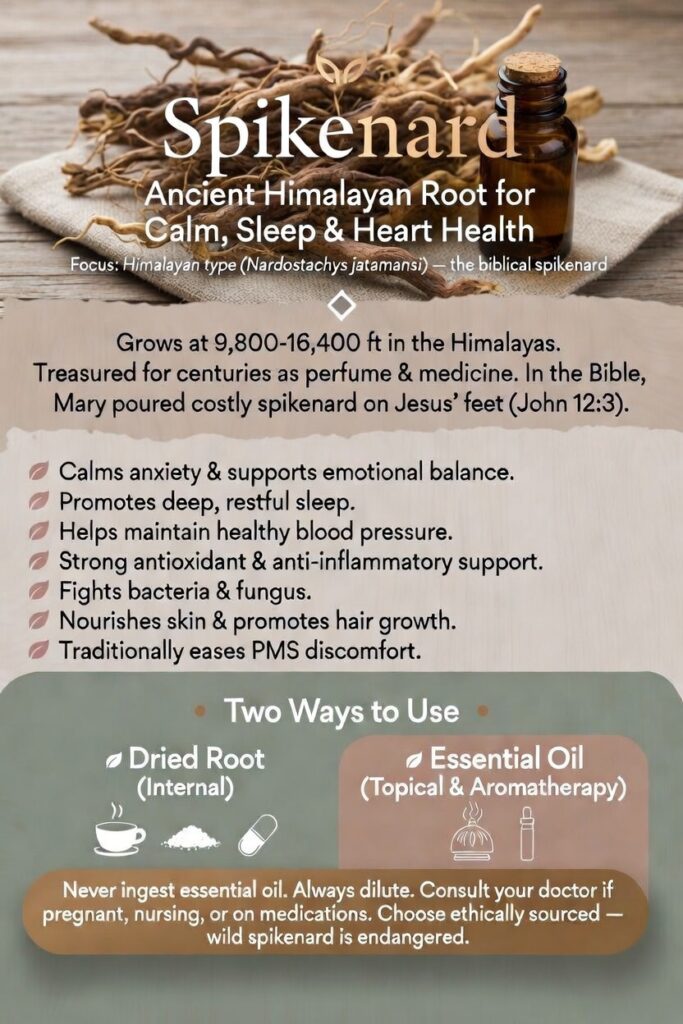
Safe and Simple Ways to Use Spikenard – Whole Root and Essential Oil
You have beautiful, flexible options. The dried root (powder, capsules, or pieces) allows traditional internal use. The essential oil is ideal for aromatherapy and diluted topical application. Always choose high-quality, ethically sourced products.
Using the Dried Root or Powder (Internal Options)
Health food stores and online retailers carry dried spikenard root, powder, or capsules—perfect for gentle daily support.
- Simple tea or decoction — Simmer 1–3 grams of chopped dried root in 1–2 cups of water for 15–20 minutes. Strain and sip warm, optionally with honey or milk. Enjoy 1–2 times daily for calming, digestive, or blood-pressure support.
- Powder — Mix 250 mg to 1–3 grams (about ¼–½ teaspoon) with warm milk, honey, or ghee. Traditional Ayurvedic doses often range from 1–3 grams per day in divided doses.
- Capsules — Follow label guidance, typically 250–500 mg, 1–3 times daily.
Pro Tip for Internal Use: Start low (250–500 mg) and increase gradually while listening to your body. Many traditional preparations combine it with warm milk at bedtime for sleep support.
Using Spikenard Essential Oil (Aromatherapy & Topical)
- Diffusion or inhalation — Add 3–5 drops to a diffuser or inhale from a tissue for quick calm and relaxation.
- Diluted topical — Blend 1–2% (2–3 drops per teaspoon) with a carrier oil like jojoba or fractionated coconut. Massage onto temples, neck, wrists, abdomen, feet, or chest.
- Bath or blend — Add a few pre-diluted drops to warm bathwater or combine with lavender for a relaxing sleep roller. Use in hair conditioner for growth support or on minor skin concerns.
Safety Guidelines for All Forms
- Dried root/powder is generally well-tolerated in moderate doses but may cause mild digestive upset if overused.
- Essential oil: Never ingest. Always dilute and patch-test.
- Consult your healthcare provider before use if pregnant, nursing, taking blood-pressure or sedative medications, or giving to children. Avoid during heavy menstrual flow or if you have low blood pressure.
- Sustainability matters: Spikenard is critically endangered in the wild due to overharvesting. Choose cultivated or ethically sourced options with CITES compliance to protect this precious plant.
Frequently Asked Questions About Spikenard
What’s the difference between the dried root and the essential oil?
The dried root contains a full spectrum of compounds and is traditionally used internally as powder or tea. The essential oil is steam-distilled from the roots—highly concentrated for aromatic and topical use only. Both offer calming benefits, but the root provides broader internal support in studies.
How quickly might I notice benefits?
Inhalation of the oil can bring calm within minutes. Consistent use of the root powder or tea (over 2–4 weeks) often supports deeper sleep and mood balance, as seen in small trials.
Is spikenard safe to take internally?
Yes, the dried root and powder have a long history of traditional internal use and were studied in clinical trials at 3 g/day. However, start low, monitor your response, and work with a knowledgeable practitioner—especially if you have health conditions or take medications.
How can I source it responsibly?
Look for sustainably cultivated dried roots or oils from reputable suppliers. Wild harvesting has endangered the plant, so ethical brands prioritize conservation.
Does the biblical connection still matter?
Absolutely. In John 12:3, Mary used pure nard—an expensive, fragrant root oil—in an act of deep devotion. Today, the same plant can bring peace and restoration to our daily lives.
Your Encouraging Next Step
You were created with an amazing capacity for healing and balance. Choose the form that feels right for you: start with a simple inhalation of the oil tonight, or brew a gentle cup of spikenard root tea before bed. Breathe deeply, reflect on God’s provision in nature, and notice how your body responds.
One small, consistent choice—like a calming tea or diffused oil—can ripple into better rest, steadier moods, and greater peace. Listen to your body, consult your healthcare provider when needed, and move forward with compassion for yourself.
You’ve got this, friend. Embrace spikenard as part of your holistic wellness journey—One small, consistent choice can help you experience the gentle spikenard benefits…one peaceful breath, faithful step, and God-given gift at a time.
If you try the root tea or oil and want to share your experience, I’d love to hear how it supports you.
References
- Bhat MD, et al. Efficacy of Nardostachys jatamansi in essential hypertension: A randomized controlled study. Complement Ther Med. 2020.
- Toolika et al. Clinical evaluation of Nardostachys jatamansi for primary insomnia (powdered rhizome study).
- Ayurvedic Pharmacopoeia of India and traditional dosage guidelines (1–3 g powder/day).
- Comprehensive reviews on phytochemistry, pharmacology, and safety of Nardostachys jatamansi (2013–2025).
- Dr. Axe: Spikenard Essential Oil Uses & Benefits (including studies on antimicrobial, anti-inflammatory, sedative, hair growth, and immune effects).
- Sustainability and CITES information from expert herbal sources (IUCN, Tisserand Institute).
- Biblical context: John 12:3 and historical accounts.
Here’s to honoring your body with wisdom, care, and the beautiful remedies placed in creation.