
Have you ever brushed against a plant that left your skin tingling, only to discover later that it could be one of the most nutritious and beneficial greens available? Stinging nettle (Urtica dioica L.) is that remarkable plant. Often dismissed as a common weed, this wild herbaceous perennial offers exceptional nutritional value and a wide range of traditional and science-supported health benefits. It deserves a respected place in our kitchens, gardens, and daily wellness routines.
What Is Stinging Nettle?
Stinging nettle is a flowering plant in the Urticaceae family. It grows abundantly across Europe, Asia, North Africa, and North America, thriving in moist, nutrient-rich soils along roadsides, riverbanks, and forest edges. Its stems and leaves are covered in tiny stinging hairs (trichomes) that release formic acid, histamine, and other compounds upon contact—creating the familiar tingling sensation. Once properly prepared by cooking, drying, or steeping, the sting disappears completely, revealing a versatile, delicious, and highly nutritious herb.
Pro Tip: Always harvest young spring leaves while wearing gloves. Blanch or sauté them thoroughly to neutralize the irritants. They make excellent additions to soups, stews, curries, pestos, and herbal teas.
A Nutrient-Dense Superfood
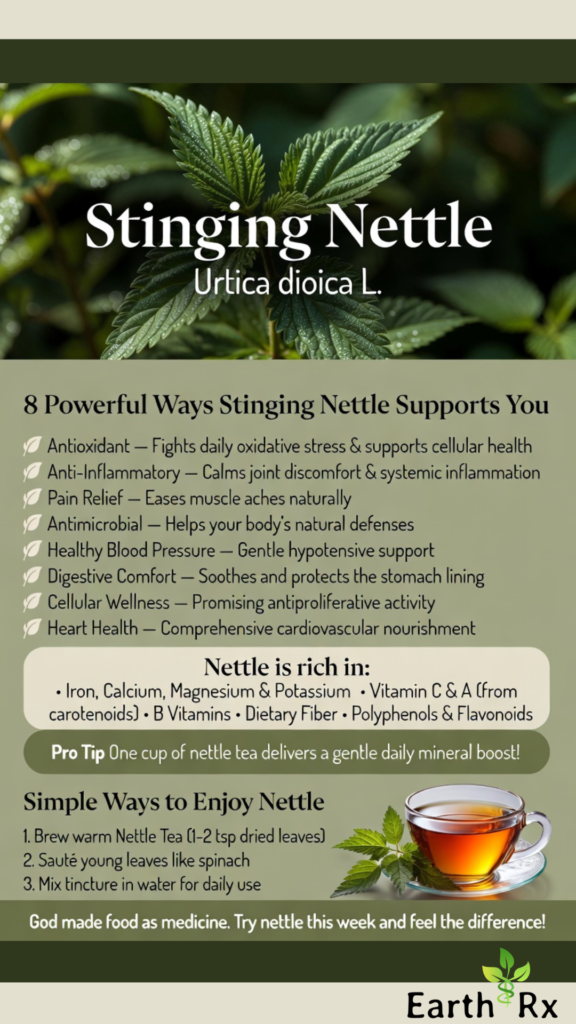
Nettle leaves are truly a vitamin and mineral powerhouse. They are rich in:
- Dietary fiber that supports healthy digestion
- Essential minerals including iron, calcium, magnesium, and potassium
- Vitamins such as vitamin C, vitamin A (from beta-carotene and other carotenoids), and several B vitamins
- Powerful antioxidant compounds including polyphenols (especially flavonoids) and carotenoids
Because of this impressive nutrient profile, nettle functions as both a nourishing food and a functional herb. All parts of the plant—leaves, stems, roots, and seeds—contain valuable bioactive compounds, though the leaves are most commonly used for everyday nutrition and general wellness.
Traditional and Modern Uses
For centuries, cultures around the world have turned to stinging nettle for healing. The leaves have traditionally been used to support joint comfort, ease seasonal allergies, and promote overall vitality. The roots are well known for helping with urinary difficulties, particularly those related to benign prostatic hyperplasia (BPH) in men. The whole plant offers broad supportive benefits that align beautifully with the principle that God made food as medicine.
Pharmacological Properties: How Stinging Nettle Supports Your Health
Stinging nettle possesses a remarkable range of pharmacological properties thanks to its rich symphony of polyphenols, flavonoids, carotenoids, minerals, and other phytochemicals. Here is a closer look at each key benefit:
Antioxidant Activity
Nettle acts as a strong natural antioxidant that helps protect your cells from oxidative stress—the internal “wear and tear” caused by free radicals from daily living, pollution, and aging. Its leaves, stems, roots, and seeds all contain high levels of polyphenols and carotenoids that effectively neutralize harmful free radicals. Laboratory studies consistently show that nettle extracts have powerful scavenging ability against compounds like DPPH radicals. This protective effect supports cellular health and may help slow age-related changes when used regularly.
Anti-Inflammatory Activity
Chronic low-grade inflammation can contribute to discomfort and reduced quality of life. Nettle offers gentle yet effective anti-inflammatory support. Its flavonoids and phenolic compounds help modulate key inflammatory pathways in the body. Traditional use for arthritis and rheumatism is backed by evidence showing reduced swelling and inflammatory markers in various studies. Nettle works with your body’s natural systems rather than simply masking symptoms, making it a valuable ally for joint comfort and systemic balance.
Analgesic (Pain-Relieving) Activity
Closely connected to its anti-inflammatory effects, nettle provides natural pain-relieving benefits. Extracts from both leaves and roots have demonstrated the ability to ease discomfort in preclinical research. These effects appear to come from compounds that help modulate pain signaling while simultaneously reducing associated inflammation. Many people find nettle especially supportive for muscle aches, joint stiffness, and general everyday discomfort.
Anti-Infectious (Antimicrobial) Activity
Nettle also supports your body’s natural defenses against certain microbes. Phenolic compounds and other bioactive elements in the plant show activity against various bacteria and pathogens in laboratory settings. While not a substitute for medical treatment when needed, this property makes nettle a helpful addition for overall immune resilience and general wellness. Traditional applications for skin issues and minor infections align well with these findings.
Hypotensive Activity
Nettle can help promote healthy blood pressure levels. Both root and leaf extracts have shown blood-pressure-lowering effects in studies, likely through mild diuretic action, support for vascular relaxation, and the balancing influence of its high potassium and magnesium content. This gentle hypotensive property makes nettle a supportive herb for cardiovascular wellness when used as part of a healthy lifestyle.
Antiulcer Activity
Your digestive lining deserves protection, and nettle offers soothing gastroprotective benefits. Leaf extracts have demonstrated the ability to help prevent and reduce ulcer formation by combating oxidative damage and inflammation in the stomach lining. Its natural compounds appear to create a calming, healing environment inside the digestive tract, supporting comfort and long-term gut health.
Antiproliferative Activity
Nettle exhibits antiproliferative properties, meaning it can help inhibit unwanted cell proliferation. In laboratory cell studies, extracts from different parts of the plant have shown the ability to slow growth in certain cell lines. This effect is largely attributed to its flavonoids and other phytochemicals that may promote healthy cell behavior and programmed cell death when appropriate. While research in this area is still developing, it highlights nettle’s broader role in preventive cellular wellness.
Cardiovascular Support
Beyond its individual effects, stinging nettle provides comprehensive cardiovascular benefits through the combined action of its antioxidant, anti-inflammatory, and hypotensive properties. Regular use may help reduce oxidative stress, support healthy blood vessels, and promote balanced lipid profiles. These synergistic actions make nettle a heart-friendly herb that nourishes the entire cardiovascular system in a gentle, natural way.
Practical Ways to Enjoy Stinging Nettle Daily
Incorporating nettle into your routine is simple and rewarding:
- Nettle Tea: Steep 1–2 teaspoons of dried leaves in hot water for 5–10 minutes. Drink daily for gentle mineral and antioxidant support.
- Cooked Greens: Sauté young leaves like spinach or add them to soups, smoothies, and egg dishes.
- Nettle Powder: Sprinkle into smoothies, baked goods, or seasoning blends for an easy nutrient boost.
- Root Extracts: Often used in tinctures or capsules for targeted prostate or urinary support.
Pro Tip: Begin with small amounts to see how your body responds. People with kidney concerns or those taking blood-thinning medications should consult their healthcare provider before regular use.
Safety and Sustainable Use
When prepared properly, stinging nettle is generally well tolerated and safe for most people. It is a sustainable, cost-effective herb that you can easily forage (from clean areas) or grow at home. Always choose pesticide-free sources and consider cultivating your own patch to support local biodiversity.
Embrace Nettle for Vibrant, Natural Wellness
Stinging nettle is far more than a nuisance weed. It is a nutrient-packed, pharmacologically active plant that can nourish your body, ease everyday discomfort, and support long-term vitality in gentle, natural ways.
Your Action Step Today: This week, pick up some dried nettle tea or fresh young leaves from a trusted source. Brew yourself a warm cup or add the greens to your next meal. Pay attention to how you feel after a few consistent days—many people notice improved energy, better digestion, or reduced seasonal discomfort.
Small, mindful steps with nature’s gifts often create the greatest improvements in well-being. You have the power to support your health naturally—one cup of nettle tea at a time.
What’s one way you plan to try stinging nettle first? I’d love to hear your experiences or questions in the comments. I’m here cheering you on as you explore this powerful green ally.
For full scientific details and references, please see the original article: https://www.sciencedirect.com/science/article/pii/S2405844022010052