
As the seasons shift and we face everyday challenges like fluctuating energy or seasonal bugs, many of us turn to time-tested, God-given remedies that support the body naturally. Cinnamon has been cherished for thousands of years—not just as a spice, but as a powerful healing plant.
The Bible itself speaks beautifully of cinnamon’s value. In Exodus 30:23–25, God instructs Moses to include “sweet cinnamon” in the sacred anointing oil, blending it with myrrh, cassia, and olive oil as a holy, fragrant offering. Later, in Proverbs 7:17 and Song of Solomon 4:14, cinnamon is celebrated for its delightful aroma and worth. These verses remind us that the Creator designed plants like cinnamon as medicine for His people (Psalm 104:14).
Today, modern science confirms what ancient wisdom knew: cinnamon essential oil (primarily from Cinnamomum verum or zeylanicum bark) delivers real cinnamon essential oil benefits through its key compounds—cinnamaldehyde (often 60–90% in bark oil, giving that signature spicy warmth) and eugenol (more prominent in leaf varieties). These bioactive elements drive antioxidant, antimicrobial, and metabolic actions. Let’s dive deeper into the top 10 health benefits of cinnamon essential oil, drawing from preclinical, lab, and some human studies. Always dilute properly and use as a complement to healthy living—not a replacement for medical care or prescribed treatments.
1. Powerful Antioxidant Support to Protect Your Cells
Every day, our cells face oxidative stress from stress, poor diet, environmental toxins, and normal metabolism—leading to free radical damage that accelerates aging and supports chronic issues.
Cinnamon essential oil stands out for its exceptional free-radical scavenging power. Multiple studies rank it among the highest antioxidant essential oils, largely due to cinnamaldehyde and eugenol neutralizing reactive oxygen species and inhibiting lipid peroxidation (the damaging oxidation of fats in cell membranes). In comparative research on spices and oils, cinnamon often shows superior activity in quenching free radicals like DPPH and protecting against peroxynitrite-induced damage.
Key takeaway: This natural defense helps shield cells, supporting long-term vitality and reducing everyday wear and tear—think of it as gentle, daily cellular armor.
2. Antimicrobial Action for Natural Defense
Seasonal challenges and everyday exposures can invite unwanted bacteria, fungi, or oral pathogens. Cinnamon essential oil offers broad-spectrum antimicrobial strength.
Lab studies demonstrate cinnamaldehyde disrupts microbial cell membranes and inhibits growth against tough strains like Pseudomonas aeruginosa (including multi-drug resistant types), Staphylococcus aureus, and fungi such as Candida. Eugenol adds supportive action. Research shows cinnamon bark oil effectively combats food spoilage organisms and oral bacteria, with some gaseous applications showing promise too.
Pro Tip: Diffuse it or add a diluted drop to a mouth rinse for gentle cinnamon oil for immune support and fresh breath.
3. Blood Sugar Balance and Metabolic Support
Stable blood sugar helps sustain energy, curb cravings, and support overall metabolic health—especially valuable if you monitor glucose levels.
Cinnamaldehyde shines here: preclinical and some human-linked studies show it enhances insulin sensitivity, improves glucose uptake into cells, and may lower fasting blood sugar. Mechanisms include mimicking insulin action and boosting thermogenesis in fat tissue. Reviews highlight cinnamon’s potential to rival certain compounds in lab models for glycemic control.
Pair this with whole-food meals, fiber-rich choices, and movement for amplified benefits.
4. Anti-Inflammatory Properties of Cinnamon Oil for Comfort
Chronic low-grade inflammation acts like a slow-burning fire, contributing to discomfort in joints, muscles, and daily well-being. Cinnamon helps douse it naturally.
Cinnamaldehyde inhibits pro-inflammatory markers like TNF-α, IL-6, NO, and others in cell and animal models. This reduces systemic inflammation and supports comfort without harsh interventions. Eugenol contributes too, protecting tissues from inflammatory stress.
Bolded takeaway: These anti-inflammatory properties of cinnamon oil offer soothing, sustained relief—ideal alongside rest and anti-inflammatory foods.
5. Heart Health and Circulation Benefits
A thriving cardiovascular system relies on balanced inflammation, healthy lipids, and smooth blood flow. Cinnamon contributes meaningfully.
Evidence links cinnamaldehyde to improved cholesterol profiles (lowering LDL oxidation and total cholesterol while supporting HDL), reduced blood pressure markers, and better vessel function. Animal and review studies suggest protection against cardiac stress, ischemia, and hypertrophy through antioxidant and anti-inflammatory pathways. Its warming nature gently promotes circulation.
6. Immune Support Through Natural Pathways
We all seek ways to fortify defenses against seasonal ups and downs. Cinnamon oil for immune support works multi-dimensionally.
Its antimicrobial prowess targets pathogens directly, while antioxidants neutralize oxidative stress that weakens immunity. Preclinical work shows modulation of immune responses and protection against infections. Combined with rest, hydration, and nutrient-dense foods, it becomes a supportive ally.
7. Brain Protection and Cognitive Enhancement
As we age, protecting brain health—reducing neuroinflammation and supporting memory—becomes a priority. Cinnamon shows encouraging potential.
Cinnamaldehyde reduces neuroinflammation (inhibiting markers in microglia), prevents harmful protein aggregation like tau (linked to Alzheimer’s models), and improves learning/memory in animal studies. Meta-analyses and reviews support cognitive benefits through antioxidant and anti-inflammatory effects.
Pro Tip: Inhale diffused oil for a gentle brain-boosting ritual.
8. Mood Enhancement and Emotional Balance
A simple aromatic lift can brighten the day and ease stress. Cinnamon essential oil provides gentle emotional support.
Inhalation studies indicate reduced anxiety-like behaviors, lowered stress markers, and promoted relaxation—likely via limbic system influence. The warm, comforting scent fosters positive mood shifts without overstimulation.
9. Digestive Wellness and Gut Comfort
Bloating, sluggishness, or post-meal discomfort can drain energy. Cinnamon aids gentle gut support.
Cinnamaldehyde and eugenol protect against inflammation, oxidative stress, and infections in the digestive tract. Traditional use and lab evidence show it eases bloating, supports microbial balance, and may reduce ulcer severity in models.
Diffuse or use diluted topically over the abdomen for soothing warmth.
10. Potential Anticancer Properties from Lab Insights
While far from a treatment and needing more human research, early preclinical work is intriguing.
Trans-cinnamaldehyde demonstrates antiproliferative effects in various cancer cell lines—inducing apoptosis (programmed cell death), arresting cell cycles, and inhibiting growth pathways like EGFR. Reviews note antioxidant, anti-inflammatory, and antimutagenic actions that may offer supportive potential in holistic approaches.
Important Safety Reminders and Precautions
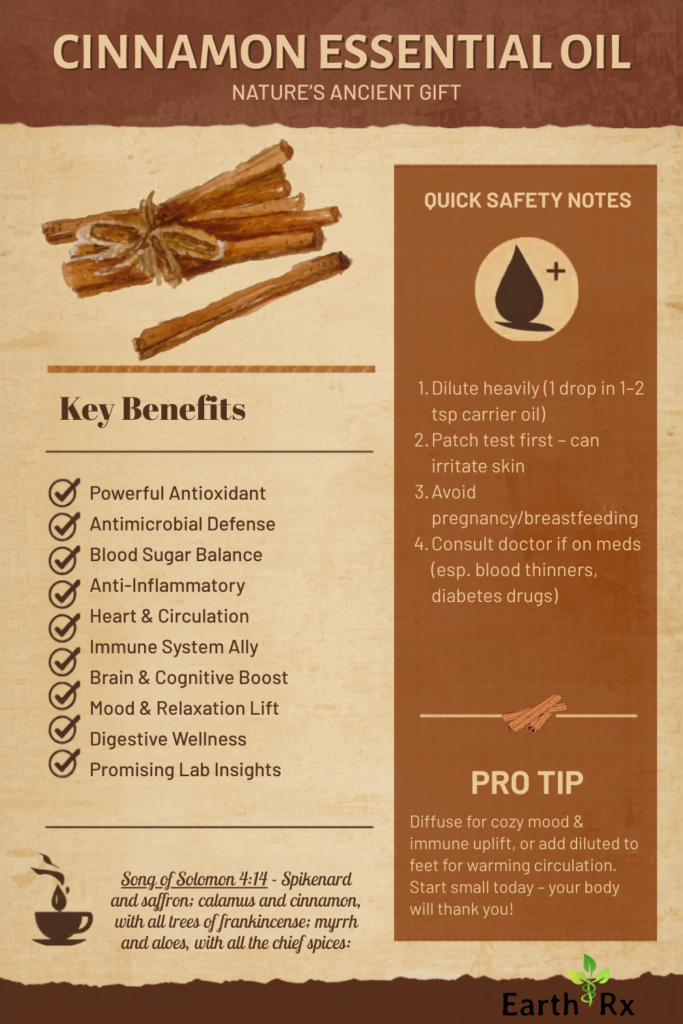
Cinnamon essential oil is highly potent and requires careful handling to stay safe. Always dilute it thoroughly (e.g., maximum dermal use around 0.07% for bark oil or 0.6% for leaf oil; typically 1 drop in 1–2 teaspoons of carrier oil like coconut or jojoba) and perform a patch test first to check for skin irritation or sensitization—cinnamaldehyde can cause redness, burning, or allergic reactions in some people. Never apply undiluted to skin, mucous membranes, or ingest without professional guidance, as it may irritate or burn tissues.
Avoid during pregnancy and breastfeeding due to potential embryotoxicity risks from cinnamaldehyde shown in animal studies. Use extra caution with children and the elderly, who may be more sensitive—dilute more heavily and consult a pediatrician first.
Regarding drug interactions: Cinnamaldehyde may affect liver enzymes involved in drug metabolism (such as CYP2C9 and CYP1A2), potentially altering how medications are processed and reducing their effectiveness or increasing side effects. This could impact blood thinners (e.g., warfarin), diabetes medications (e.g., insulin or oral agents), certain antidepressants, NSAIDs, or other drugs cleared by the liver. Cassia varieties may also contain higher coumarin, adding blood-thinning concerns. If you’re on any medications—especially for diabetes, blood pressure, clotting, or chronic conditions—consult your healthcare provider before use to avoid unexpected interactions.
Embracing Cinnamon Essential Oil in Your Holistic Routine
These expanded cinnamon essential oil benefits—rooted in cinnamaldehyde and eugenol’s powerful actions—highlight why this biblical plant remains a wellness treasure. God created plants to nourish and heal in harmony with our bodies (Genesis 1:29).
Start gently: diffuse 2–3 drops for mood and immune uplift, massage diluted oil into feet for circulation, or inhale for digestive comfort. Combine with nourishing meals, good sleep, movement, and prayer—you’ll likely notice more steady energy and comfort.
You have the tools to support your health naturally. Try one benefit this week and tune in to how your body responds. Here’s to thriving with simple, joyful wellness!
References
Here are key sources supporting the benefits discussed. These include peer-reviewed reviews, preclinical studies, and lab research (primarily from PubMed/PMC and scientific journals):
- Guo J, et al. (2024). Therapeutic Potential of Cinnamon Oil: Chemical Composition, Pharmacological Actions and Applications. Pharmaceuticals. PMC11677886.
- Pagliari S, et al. (2023). Antioxidant and Anti-Inflammatory Effect of Cinnamon. PMC9914695.
- Shang C, et al. (2021). Beneficial effects of cinnamon and its extracts in the management of cardiometabolic diseases. Food & Function. RSC Publishing.
- Rao PV, Gan SH. (2014). Cinnamon: A Multifaceted Medicinal Plant. Evidence-Based Complementary and Alternative Medicine. PMC4003790.
- Błaszczyk N, et al. (2021). The Potential Role of Cinnamon in Human Health. Forests. MDPI.
- Behbahani BA, et al. (2020). Chemical Composition and Antioxidant, Antimicrobial, and Antiproliferative Activities of Cinnamomum zeylanicum Bark Essential Oil. Evidence-Based Complementary and Alternative Medicine. PMC7210559.
- Živković M, et al. (2025). Comprehensive Phytochemical Analysis and Evaluation of Antioxidant, Antimicrobial, Cytotoxic, and Immunomodulatory Activities of Commercial Cinnamon Bark Essential Oil. International Journal of Molecular Sciences. PMC12250438.
- Karimirad R, et al. (2025). Recent Advances on the Analysis and Biological Functions of Cinnamaldehyde. Antioxidants. PMC12291693.
- Han X, et al. (2017). Antiinflammatory Activity of Cinnamon (Cinnamomum zeylanicum) Bark Essential Oil. Phytotherapy Research. PMC5518441.
- Various additional supporting studies on cinnamaldehyde’s mechanisms (e.g., antimicrobial, antioxidant, metabolic effects) from PMC and journals like Frontiers in Pharmacology, Molecules, and Metabolism (2016–2025).
- Tisserand R, Young R. (2014). Essential Oil Safety (2nd Edition). Churchill Livingstone Elsevier (profiles on cinnamon bark/leaf oils, dermal limits, embryotoxicity, and interactions).
- Dosoky NS, et al. (2021). Maternal Reproductive Toxicity of Some Essential Oils. PMC7956842.
These references provide a strong evidence base—check PubMed or the linked DOIs for full details. Always cross-reference with your healthcare provider for personalized application.